The three trees over most Murfreesboro roofs — and what to do about each
A hackberry that drops a limb every spring, a silver maple with a split trunk, a white oak that's been there since the house was built: three very different answers, from an arborist who knows which is which.
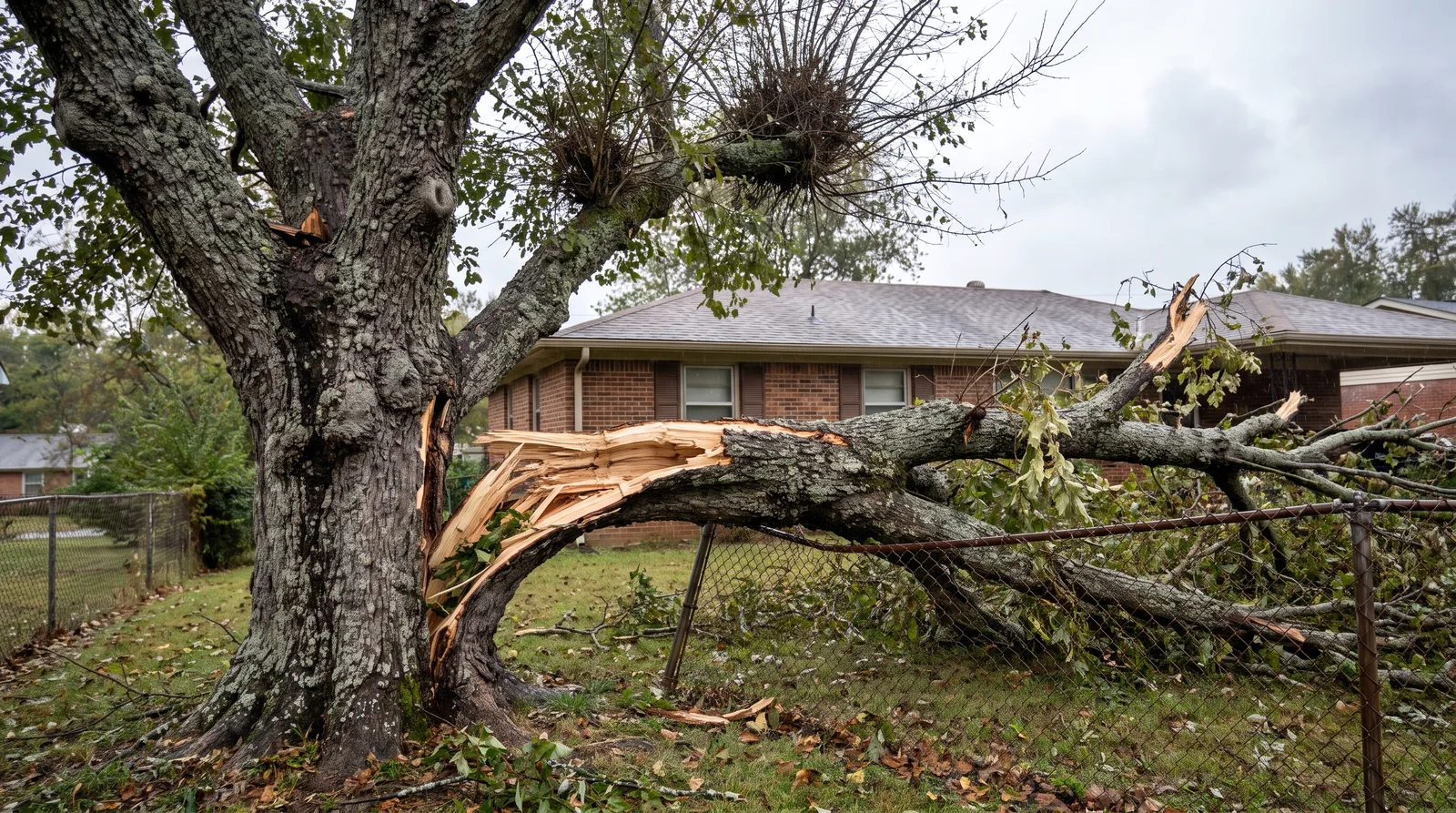
Walk any street of 1950s and '60s brick homes in Murfreesboro — around MTSU, off Bradyville Pike, along Cason Lane — and the big trees over the roofs are almost all one of three things. The hackberry got there on its own: it's the tree that comes up along every fence line in the Central Basin, grows fast in thin limestone soil, and then spends its middle age shedding brittle limbs weighed down by witches'-broom twig clusters. The maples were planted: sugar maples that are genuinely worth keeping for another century, and silver maples that were sold as fast shade and are now hollow, over-extended and splitting at the crotch. The oaks — white, chinkapin, shumard, post — were mostly there before the house was, and a healthy one is the most valuable thing in the yard.
Our arborist looks at the species, the trunk, the unions and what's under the canopy, and gives you one of four answers: prune it, cable it, take it down, or leave it alone. A sound hackberry gets thinned and deadwooded so wind goes through it instead of into it. A silver maple with a bark-included crotch gets a cable, or comes down if the split has started. A white oak gets pruned in the dormant season and otherwise left alone. And a hackberry with a hollow at the base and a lean toward the bedroom gets removed before the next March front does it for you.
What's included
Species & risk assessment
Hackberry vs. sugar maple vs. silver maple vs. oak — and whether the trunk, the unions and the roots are sound.
Hackberry management
Thinning, deadwooding and end-weight reduction on sound hackberries; removal when the trunk has gone hollow.
Maple care
Sugar maples pruned for structure and kept; silver maples cabled or removed depending on the crotch.
Oak pruning
Dormant-season cuts only, to keep oak wilt beetles off fresh wounds, with the canopy raised and cleaned.
Decay inspection
Sounding, probing and, when it's worth it, a resistance drill at the base and the unions before you decide.
Removal when warranted
Rigged or craned out over the house when the tree can't be made safe.
Hackberry, maple and oak care cost in Murfreesboro
| Job | Typical price | Notes |
|---|---|---|
| Hackberry thinning & deadwooding (50–70 ft) | $650 – $1,600 | Every 3–4 years |
| Silver maple reduction over a roof | $700 – $1,800 | End weight off the house side |
| Sugar maple or oak crown cleaning | $500 – $1,400 | Dormant season |
| Cable installation, one union | $450 – $950 | See cabling & bracing |
| Hollow hackberry or split maple removal (60–80 ft) | $1,600 – $4,500 | Rigged or craned |
| Arborist inspection & written report | $150 – $350 | Credited toward any work |
These are 2026 Rutherford County ranges so you can budget. Your written price is itemized — removal, rigging or crane, hauling, stump grinding, any paperwork — and good for 30 days.
Recent work
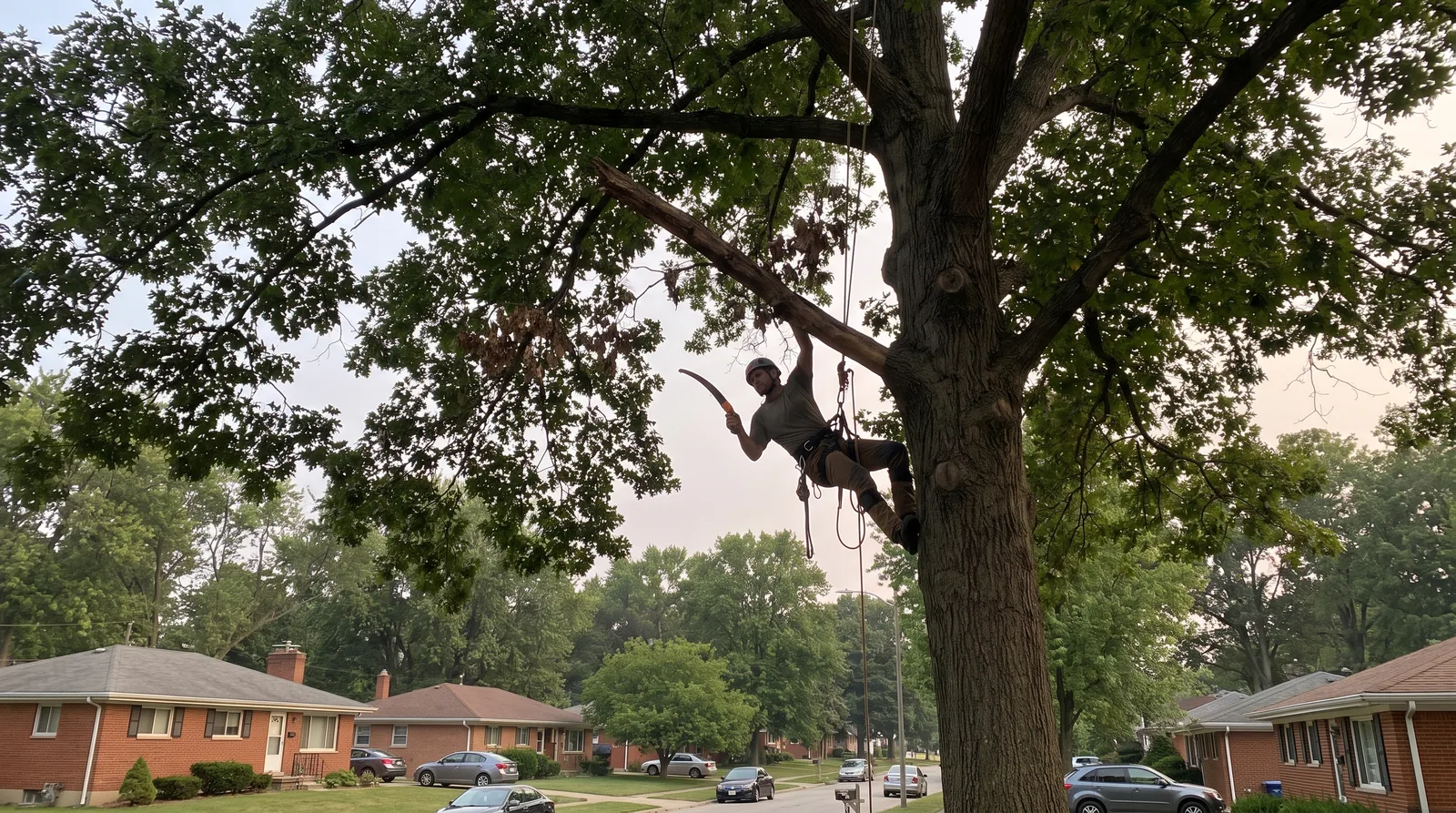
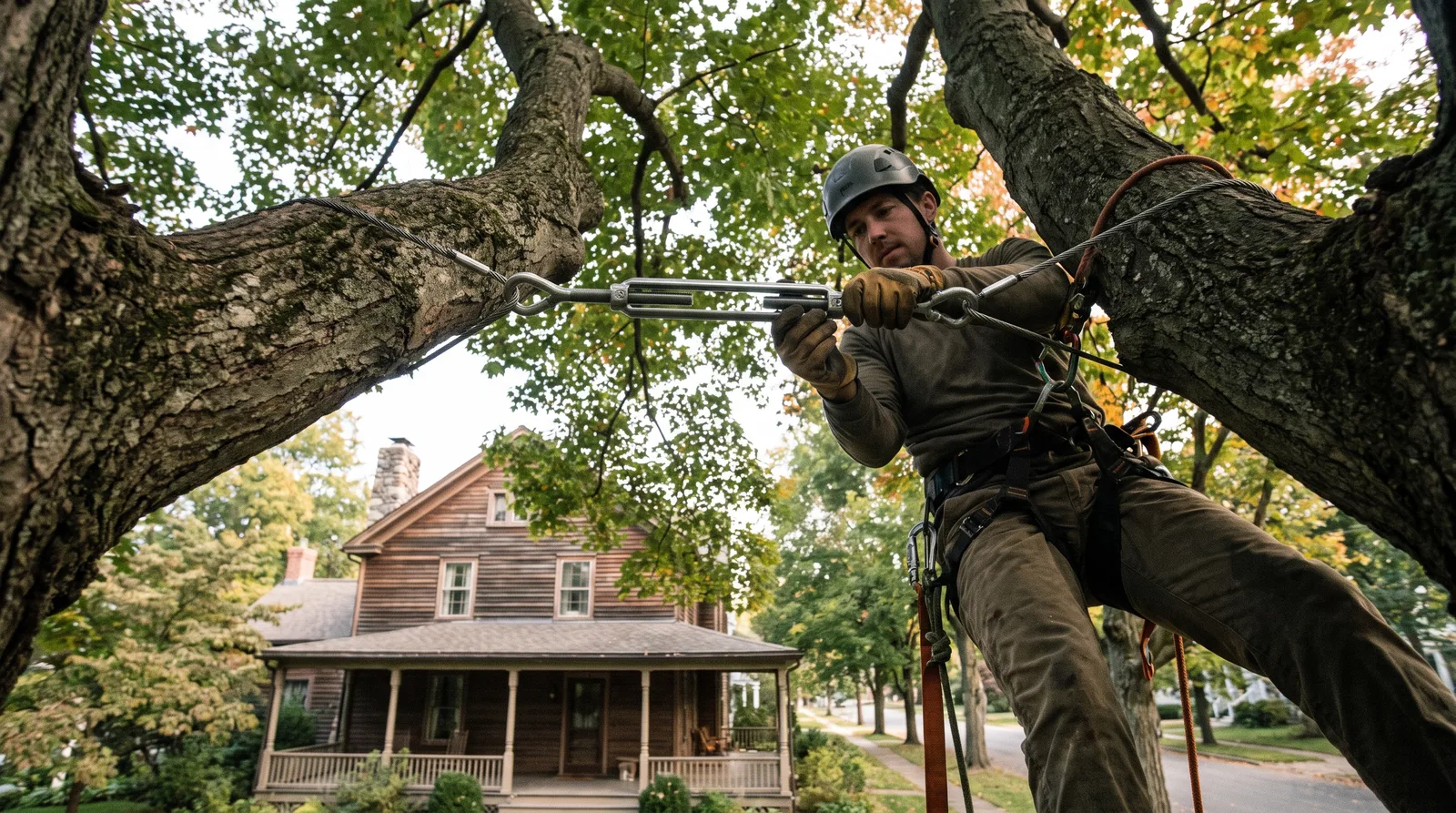
Questions we get about hackberry, maple & oak care
How do I know if my hackberry is dangerous?
Look at the base and the unions. A hollow or a cavity at the base, mushrooms or shelf fungus on the trunk, a crack running down from a fork, or a sudden lean after a wet week are the signs that matter. Witches' brooms in the twigs and warty bark are normal for a hackberry and don't mean it's failing. Dropping small dead limbs every year is normal too; dropping a live limb the size of your leg is not.
Are silver maples really that bad?
They were the fast-shade tree of the 1960s, and forty years later most of them have weak, bark-included forks and hollow trunks. The wood is soft, the roots heave sidewalks, and they split in ice. Some can be cabled and reduced and kept for a while; many in Murfreesboro are past that. A sugar maple is a different tree entirely and worth every dollar you spend on it.
When should oaks be pruned in Tennessee?
In the dormant season — roughly November through February — so fresh cuts aren't open when the beetles that spread oak wilt are flying. Deadwood and storm damage come out whenever they need to.
Can you tell me if the tree needs to come down, or will you just sell me a removal?
Our arborist gives you the assessment first and the price second, and most of the trees we look at get pruned or left alone rather than removed. We'd rather be the company you call back in five years.
My chinkapin oak has yellow leaves — is it dying?
Chinkapin and shumard oaks are limestone-loving trees and usually do fine here; yellowing on a young oak is often a soil or watering issue after a hot summer, not a death sentence. Sweetgums and pin oaks, on the other hand, chlorose badly in our high-pH soil. We'll look before you pay for anything.